Table of Contents
- Understanding Zoning Ordinances and Land Use Rules
- The Municipal Planning Department: Your First Stop
- A Step-by-Step Guide to the Permitting Process
- Reduced Costly Project Disruptions for Land Use Planning
- Public-Private Partnership Development Strategy
- Community Engagement Strategies for Developers
- Using Digital Tools and Due Diligence to Speed Approvals
- Frequently Asked Questions
Last Updated: October 2, 2026
Understanding Zoning Ordinances and Land Use Rules
Navigating municipal development starts with the zoning ordinance, the local law that dictates what can be built where. These rules govern land use, density, height, setbacks, and parking, shaping every approval decision.
Zoning codes separate incompatible uses, keeping factories away from homes and matching infrastructure to neighborhood density. For developers, the first question is never “what do I want to build” but “what does the code allow here.”
Planning departments update ordinances regularly, so verify the current text with the planning department before you commit capital.
How Zoning Variances Work
A zoning variance is an official exception that lets a property owner deviate from a specific requirement of the zoning code when strict application would create unnecessary hardship. Variances are narrow by design, addressing one rule at a time, a height limit or a setback distance, not the entire zoning designation.
The process usually runs through a board of adjustment or appeals and requires a public hearing where neighbors can speak for or against the request. Approval hinges on showing the hardship is unique to the property and not self-created.
A variance is not a shortcut around bad planning. If you need five to make a project work, the site is probably wrong for your design. RC Funding has seen projects stall for months because a developer treated variances as a formality rather than a risk to map early.
Filing for a variance before checking whether your use is permitted at all is a costly sequencing error. If the underlying use is not allowed in that district, no variance will save the project, and you will have spent legal fees and public goodwill for nothing.
The Municipal Planning Department: Your First Stop
The municipal planning department reviews development applications, interprets the zoning code, and recommends approval or denial to the elected body that makes the final call. It is both gatekeeper and guide.
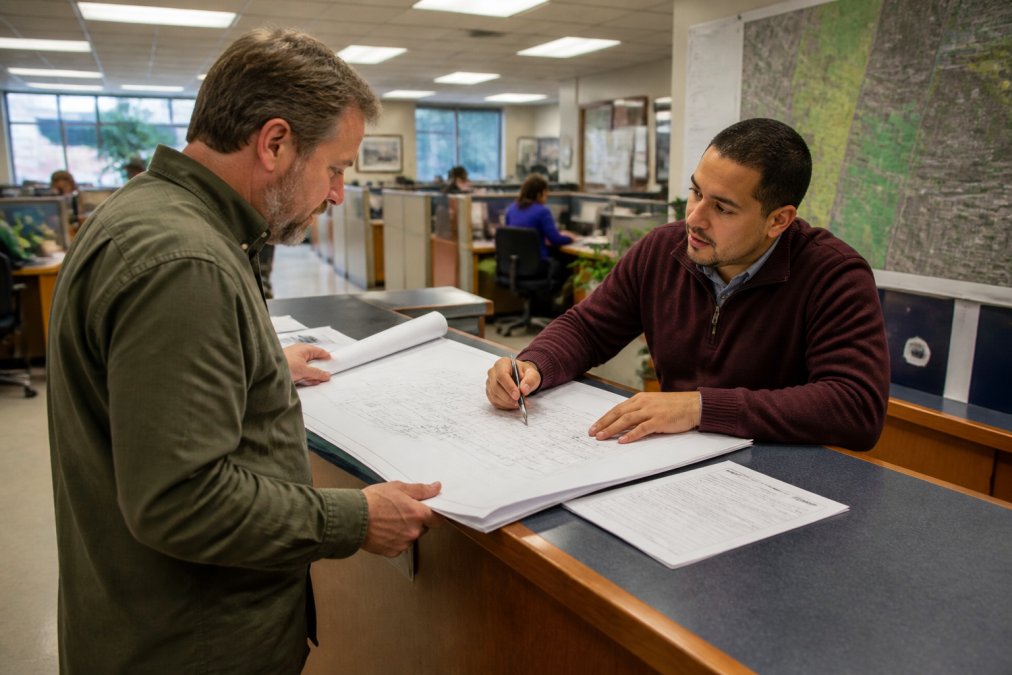
Staff planners are not your adversary.
A Step-by-Step Guide to the Permitting Process
The permitting process is the sequence of reviews, fees, and public approvals a project must clear before construction. Timelines vary, but the structure is fairly consistent. Here is the typical path for a commercial or mixed-use project in a mid-sized city.
| Step | What Happens | Typical Duration | Who Decides |
|---|---|---|---|
| Pre-application meeting | Informal review of concept | 1-2 weeks | Planning staff |
| Formal submission | Completeness and technical review | 4-12 weeks | Multiple departments |
| Public hearing | Testimony and recommendation | 2-8 weeks | Planning commission |
| Final approval | Elected body vote | 2-6 weeks | City council or board |
Step 1: Pre-Application Meeting
The pre-application meeting is a low-stakes conversation where you present your concept and staff explain what the code requires. Bring a site plan, a clear description of the use, and your questions. This is where you learn about infrastructure requirements, environmental review triggers, and any overlays that add rules on top of the base zoning.
Step 2: Formal Submission and Review
Formal submission triggers a completeness check. If your packet is missing documents, the clock stops until you supply them. Fire, utilities, transportation, and environmental reviewers each get a pass at your plans, so expect comments and revisions.
Step 3: Public Hearings and Approvals
Public hearings are where stakeholder management gets real. You present the project, staff give their recommendation, and residents speak. Approval often comes with conditions attached, such as a traffic study or landscaping buffer, read them carefully before you celebrate.
Request the staff report a full week before any public hearing. It tells you exactly what the planners will recommend and why, which gives you time to prepare responses instead of reacting live.
Step 4: Post-Approval Compliance
Approval is not the finish line. Most permits carry ongoing obligations through construction and sometimes beyond: periodic inspection reports, a sediment and erosion control plan, or noise ordinance compliance during certain hours. Missing a condition can trigger a stop-work order, fines, or even revocation of the approval.
Reduced Costly Project Disruptions for Land Use Planning
Reduced costly project disruptions for land use planning comes down to one habit: identifying risk before you spend money. Most delays are not surprises. They are known issues that nobody surfaced early enough.
A due diligence checklist for regulatory risk should include:
- Current zoning designation and permitted uses verified in writing
- Overlay districts and design standards identified
- Environmental history of the parcel reviewed
- Utility capacity and infrastructure requirements confirmed
- Known neighborhood opposition or prior project history researched
- Approval timeline mapped against your financing schedule
Public-Private Partnership Development Strategy
A public-private partnership development strategy aligns private capital with public goals and changes the regulatory math. When a municipality has a stake in the outcome, approvals tend to move with more coordination and fewer surprises.
In a public-private project, the regulatory framework and the partnership agreement are the same conversation. Treat legal review and political relationship-building as one workstream, not two.
Community Engagement Strategies for Developers
Community engagement strategies for developers work best when they start before there is anything to oppose. Pushback usually grows from feeling surprised, not from genuine disagreement. Developers who sail through public hearings are rarely the ones with the best lawyers, they are the ones who showed up early, listened, and adjusted before opposition could organize.
The Three-Phase Engagement Framework
Think of community engagement as three phases, each with a different goal and tactics.
What to Track and Why
Keep an engagement log with four columns: date, person or group, concern raised, and your response. It reminds you what you promised and, if a dispute arises, shows a pattern of good-faith engagement. Some jurisdictions ask for a community outreach summary with the application, so having it ready saves time.
When Engagement Does Not Work
Not every objection can be resolved. Some neighbors oppose any change, and some concerns, like regional traffic patterns, are outside your control. The goal is not unanimous support but demonstrating that you listened, made reasonable adjustments, and that remaining concerns are either addressed by conditions or unsupported by the approval criteria. Decision-makers can tell good-faith engagement from its absence, and that often decides close votes.
Using Digital Tools and Due Diligence to Speed Approvals
Digital permitting and modern property technology are shortening approval timelines in many jurisdictions. Online portals let developers submit applications, track review status, and respond to comments without repeated trips to the counter.
Two approaches competitors rarely mention are worth adopting:
- Post-approval compliance monitoring. Permit conditions carry ongoing obligations, and missing one can halt construction or trigger penalties. Track every condition in a shared system with owners and deadlines.
- Digital permitting integration. Where a city offers an online portal, use it fully. Submitting through it creates a timestamped record that protects you if a dispute arises about what was filed and when.
Frequently Asked Questions
What are the most common regulatory hurdles in municipal land development?
The most common hurdles are zoning mismatches, incomplete permit applications, and environmental review requirements. Zoning ordinances often do not match what you want to build, so you may need a variance or rezoning. Incomplete submissions trigger repeated review cycles that add months. Environmental impact assessments and infrastructure requirements can also stall projects. Understanding these three areas before you buy land or commit capital helps you plan realistic timelines and avoid surprises.
How do public-private partnerships help in navigating development regulations?
A public-private partnership development strategy aligns your project with municipal goals, which can move approvals faster. When a city sees your project supports affordable housing, job creation, or blight reduction, planning staff and elected officials are more likely to support it. PPPs also give you access to public financing tools and can clarify which regulations apply. The key is structuring the partnership early, before you submit plans, so both sides agree on expectations and risk sharing.
What role does early community engagement play in regulatory approval?
Early community engagement strategies for developers can prevent the delays that come from last-minute public opposition. Meeting neighbors, hosting open houses, and adjusting your design based on feedback before formal hearings shows good faith. When residents feel heard, they are less likely to appeal approvals or lobby against your project. This approach reduces costly project disruptions for land use planning because you address concerns while changes are still cheap and easy to make.
How can developers reduce costly project disruptions during the planning phase?
Start with due diligence that goes beyond title searches. Review zoning history, environmental records, and infrastructure capacity before you close on a property. Meet with planning staff to confirm what they will approve. Build a checklist that covers permits, utility connections, and community concerns. When you identify hidden risks early, you can price them into your financing or walk away. This prevents mid-project surprises.
What are the primary federal and local compliance requirements for urban redevelopment?
At the federal level, environmental regulations under the EPA govern brownfield cleanup, stormwater management, and air quality. At the local level, you will need building permits, zoning approvals, and sometimes historic preservation review. Some projects also require traffic studies or utility capacity assessments. The exact requirements depend on your site and project type, so always confirm with your municipal planning department and a qualified environmental consultant before you finalize plans.
How do you manage zoning and land use planning complexities effectively?
Read the zoning ordinance for your specific parcel, not just the general district rules. Check for overlay districts, design guidelines, and recent amendments that affect your site. If your project does not fit by-right, explore a variance or conditional use permit. Hire a local land use attorney or consultant who knows the planning department’s preferences. Document everything and keep a timeline of every submission and response. This organized approach reduces administrative burden and keeps your project moving.