Table of Contents
- Step 1: Run Environmental Due Diligence for Commercial Property Before You Commit
- Step 2: Use a Commercial Real Estate Risk Assessment Checklist
- Step 3: Pressure-Test the Numbers Before You Overleverage
- Step 4: Build Community Engagement Strategies for Developers Into the Timeline
- Step 5: Apply Public-Private Partnership Risk Management From Day One
- Step 6: Plan Your Exit Before You Break Ground
- Common Mistakes That Sink Commercial Real Estate Redevelopment Projects
- Conclusion: Mitigate Redevelopment Risks Early or Pay for Them Later
- Frequently Asked Questions
Last Updated: October 7, 2026
Step 1: Run Environmental Due Diligence for Commercial Property Before You Commit
Learning how to mitigate risks of commercial real estate redevelopment starts with environmental due diligence for commercial property, the process of checking a site for pollution, hazardous waste, and regulatory problems before you buy or build.
Here’s the part most guides skip. Environmental review isn’t a box you check once. It shapes your budget, your lender’s appetite, and your exit options.
Phase I and Phase II Assessments: What Each One Actually Tells You
A Phase I Environmental Site Assessment is a records-and-site review that looks for signs of past contamination. A Phase II assessment is the follow-up that actually tests soil, groundwater, and building materials when Phase I finds a reason for concern.
Think of it this way:
- Phase I: reads the history. Old gas stations, dry cleaners, and factories leave paper trails.
- Phase II: takes samples. Labs test what’s really in the ground.
- Phase I usually takes weeks. Phase II can take months and costs far more.
If Phase I turns up nothing, you may never need Phase II. If it flags a former industrial use, skip Phase II at your peril. The cleanup bill lands on you.
Skipping Phase II to save time is the single most expensive shortcut in redevelopment. A contaminated parcel can trigger federal and state cleanup liability that follows the owner, not the previous tenant.
Step 2: Use a Commercial Real Estate Risk Assessment Checklist
A commercial real estate risk assessment checklist is a written list of every risk you must clear before committing capital. It turns a vague gut feeling into something you can track, assign, and sign off on.
Run every deal through the same list. No exceptions.
Zoning, Building Codes, and Environmental Regulations to Verify
These three items sink more projects than any financing gap. Verify each one in writing before you sign.
- Zoning laws: Confirm the current use and what the city will actually allow. A rezoning can add months.
- Building codes: Older buildings rarely meet current standards. Plan for upgrades.
- Environmental regulations: Check federal, state, and local rules for your specific site and use.
- Permits and approvals: Map every required sign-off and who issues it.
A common mistake is trusting a verbal “it should be fine” from a city contact. Get it in writing. Always.
Step 3: Pressure-Test the Numbers Before You Overleverage
Overleveraging is borrowing so much that a small hiccup, a delay, a rate bump, a soft market, wipes out your cushion. It’s the quiet killer of otherwise solid projects.
Ask hard questions:
- What if construction runs long?
- What if interest rates climb before you lock in?
- What if occupancy fills slower than planned?
- What if one major tenant walks?
Also plan for interest rate volatility and liquidity risk. Keep a cash reserve for the surprises you can’t name yet. If your deal only works when everything goes right, it doesn’t work.
| Risk Area | Warning Sign | Mitigation |
|---|---|---|
| Overleveraging | No cash cushion | Hold a reserve fund |
| Rate volatility | Floating-rate debt | Lock rates or hedge |
| Occupancy | Slow lease-up | Pre-lease before building |
| Tenant credit | Weak tenants | Check credit, diversify |
Tax-Smart Moves Most Guides Skip
Here’s where the numbers get interesting. Most redevelopment guides stop at the debt side and never mention the tax side. Tax structure can be the difference between a project that pencils and one that doesn’t.
A few mechanisms worth understanding:
- Like-kind exchanges (Section 1031): If you’re selling another property to fund this redevelopment, a qualified intermediary can hold the proceeds so you defer capital gains and depreciation recapture. The catch: strict timelines and the replacement property has to qualify. Miss the window and the tax bill hits.
- Opportunity Zone deferral: If the site sits in a qualified opportunity zone, you may be able to defer and partially reduce capital gains by reinvesting through a qualified opportunity fund. The rules are detailed and the clock matters, so this is a conversation to have with a tax advisor early, not at closing.
- Cost segregation: A cost segregation study reclassifies parts of the building (parking, landscaping, certain systems) into shorter depreciation lives. That front-loads deductions and improves cash flow in the early years when you need it most.
- Historic tax credits: If you’re rehabbing an older building, the federal historic tax credit can offset a meaningful chunk of qualified rehabilitation expenses. Many states layer their own credit on top.
None of these are automatic. Each has eligibility rules, recapture risk, and paperwork. But ignoring them means leaving money on the table that could be your reserve fund.
Tax structure isn’t a back-office detail. It’s a risk mitigation tool. A deal that looks thin on the debt side can work once the tax side is structured correctly.
Build the Capital Stack With Cushion, Not Hope
Think of your capital stack in layers: senior debt, mezzanine or preferred equity, and your own equity. The more layers, the more parties who can pull the plug when things wobble.
A common pattern is to stress-test at 10-15% cost overrun and 6-12 months of delay. If the deal survives both, you have a real cushion. If it only survives one, you’re gambling.
Step 4: Build Community Engagement Strategies for Developers Into the Timeline
Community engagement strategies for developers work best when they start early, not after the plans are final. Neighborhood pushback is one of the most underrated risks in redevelopment. It can delay approvals, trigger lawsuits, and cost you months.
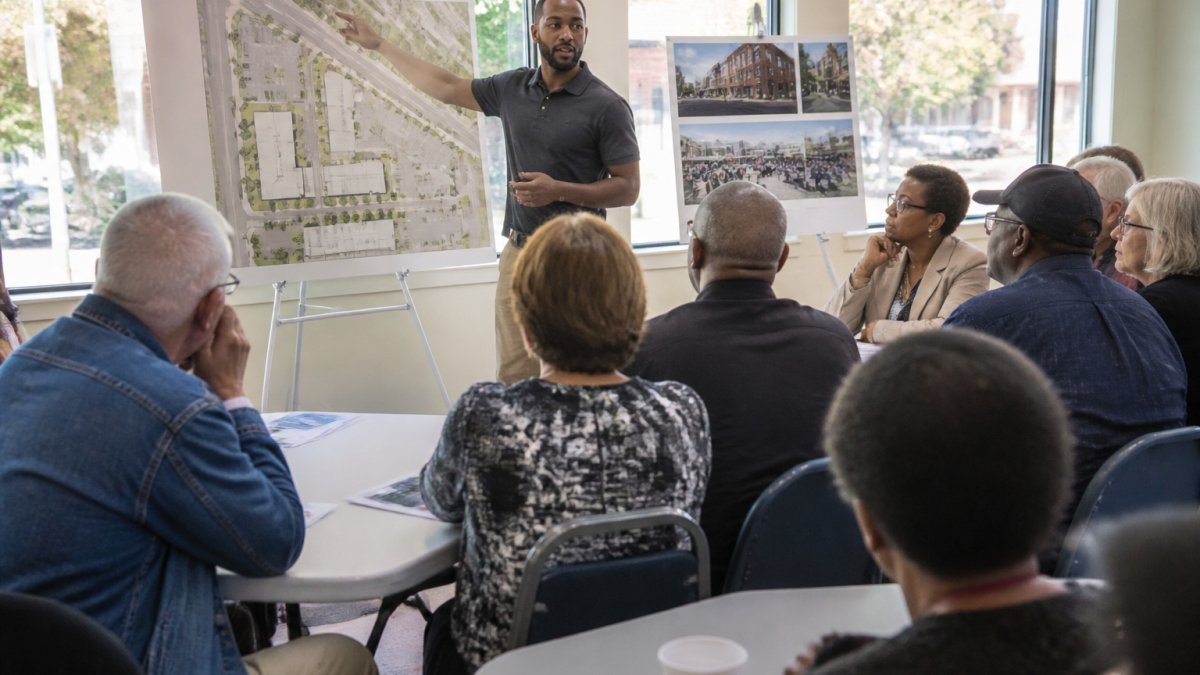
Treat engagement as a project phase with its own budget and schedule. Hold listening sessions before you finalize designs. Address parking, noise, and traffic concerns head-on.
Bring a revised plan to your second community meeting. Showing residents that their input changed something builds trust faster than any presentation.
Step 5: Apply Public-Private Partnership Risk Management From Day One
Public-private partnership risk management is the practice of splitting and assigning risks between the public and private sides of a deal in writing. Cities bring land, grants, and approvals.
Lock down these points early:
- Who pays if cleanup costs exceed estimates?
- Who covers delays caused by permitting?
- How are cost overruns shared?
- What happens if the public side changes leadership?
The U.S. Government Accountability Office’s work on public-private partnerships has long noted that unclear risk sharing is a top cause of project disputes. Get it in writing, and get it reviewed by counsel.
Step 6: Plan Your Exit Before You Break Ground
Your exit strategy is how you get your money out, and it should exist before construction starts. Most developers think about the exit last. That’s backwards. The exit shapes your financing, your hold period, and your risk tolerance.
Map your options up front:
- Sell on completion to a long-term holder
- Refinance and hold for cash flow
- Bring in a partner to buy out your position
- Reposition the asset later if the market shifts
But here’s the part almost no one writes about: what happens when your primary exit doesn’t work? That’s where exit strategy contingency planning earns its keep.
Build a Plan B and Plan C Before You Need Them
A single exit path is a single point of failure. If the market softens, if a buyer walks, if rates spike and refinancing gets expensive, you need a second and third door already framed.
Think through these scenarios in advance:
- Stalled lease-up: If occupancy lags, can you convert part of the asset to a different use? Can you bring in a short-term operator to generate cash while you wait?
- Buyer walks at closing: Do you have a backup buyer list, or a bridge lender who can hold the asset while you re-market?
- Refinance denied: If the take-out lender says no, is there a debt fund or credit union in your network that can step in? What are their terms?
- Partner dispute: If a partner wants out early, what does your operating agreement say about buyout valuation and timing?
Write these down as decision trees, not vague intentions. “If X happens by month Y, we do Z.” That’s what turns a contingency plan into an actual plan.
The worst time to negotiate an exit is when you’re forced to. Lenders and buyers can smell desperation. Having a documented Plan B gives you leverage even if you never use it.
Structure the Deal So the Exit Is Possible
Your exit isn’t just a market decision. It’s a legal and financial structure decision made at the start.
- Prepayment terms: Does your loan have a lockout period or yield maintenance penalty? If so, your refinance exit may be more expensive than you think.
- Transfer rights: Can you sell the asset without lender consent? If not, how long does consent take?
- Partner buyout clauses: Are they clear on valuation method and timeline?
- Entity structure: Does your LLC or partnership structure make it easy to bring in a new investor or sell a portion?
A common pattern is to review these with counsel and your lender before closing, not after. The cost of fixing a bad structure later is almost always higher than getting it right up front.
The Takeaway
Exit planning isn’t pessimistic. It’s what separates developers who survive a downturn from those who don’t. Build your primary exit, then build two more. Document them. Revisit them every quarter as the project moves.
Common Mistakes That Sink Commercial Real Estate Redevelopment Projects
Treating risk review as a one-time event is a common mistake in how to mitigate risks of commercial real estate redevelopment. Risk changes as a project moves.
Watch for these:
- Skipping environmental review to save time
- Overleveraging with no reserve
- Ignoring community concerns until approval time
- Signing partnership deals without clear risk terms
- Having only one exit path
Technology now helps here. Modern monitoring tools track permits, environmental data, and market shifts in real time, so problems surface early. That’s a genuine change from how this work was done a decade ago.
Conclusion: Mitigate Redevelopment Risks Early or Pay for Them Later
Every redevelopment carries risk. The developers who find risk early, price it honestly, and plan for it before committing capital are often more successful.
This is exactly where RC Funding helps. Our customized Developer Playbook identifies hidden risks before major decisions, strengthens alignment with municipal and stakeholder conditions, and maps effective financing pathways.
Schedule a consultation with RC Funding and move forward with a clear view of your project’s real risks.
Frequently Asked Questions
What are the most common risks in commercial real estate redevelopment?
The biggest risks fall into four buckets: environmental contamination discovered late in the process, zoning and building code conflicts that stall permits, financial overleveraging when interest rates shift, and community opposition that delays or kills projects. Construction cost overruns and tenant credit risk also matter. Most costly surprises trace back to skipping due diligence or underestimating how long municipal approvals take. A structured risk assessment checklist catches these before capital is committed.
How do environmental regulations impact redevelopment timelines?
Environmental regulations can add months to a redevelopment timeline. A Phase I assessment typically takes two to four weeks, and if it flags potential contamination, a Phase II investigation adds another four to eight weeks. If remediation is required, the timeline stretches further depending on the scope. Brownfield sites often qualify for federal or state incentive programs that offset costs, but the application process itself takes time. Build environmental due diligence into your schedule from the start, not after you’ve signed a purchase agreement.
How can investors identify hidden risks before breaking ground?
Start with a commercial real estate risk assessment checklist that covers environmental history, zoning compliance, structural condition, utility capacity, and title issues. Walk the site with a qualified inspector and review municipal records for prior uses. Talk to neighboring property owners about drainage, traffic, and noise concerns. Run conservative price calculations that assume higher construction costs and longer timelines than your contractor projects. The goal is to surface problems while you still have leverage to renegotiate or walk away.
What are the best practices for community engagement during redevelopment?
Engage early, before plans are finalized. Hold listening sessions to understand neighborhood concerns about traffic, parking, noise, and displacement. Bring renderings and answer questions directly. Identify community leaders and local organizations who can serve as honest intermediaries. Document every commitment you make and follow through. Developers who treat engagement as a checkbox may face organized opposition later. Building genuine relationships can reduce the risk of costly delays and last-minute conditions from municipal boards.